Premium Wood Upgrade

Premium Cedar Fence Installation in Wilmington

When you want the warmth of a wood fence with the longevity of a serious investment, Western Red Cedar is the upgrade. Naturally rot- and insect-resistant, free of pressure-treatment chemicals, and weathering gracefully to a refined silver-gray patina, cedar fences last 20–30 years in Wilmington's coastal climate. Flytrap Fence Company builds premium cedar privacy fences across the Cape Fear region — engineered to outlast pressure-treated pine and look better doing it.
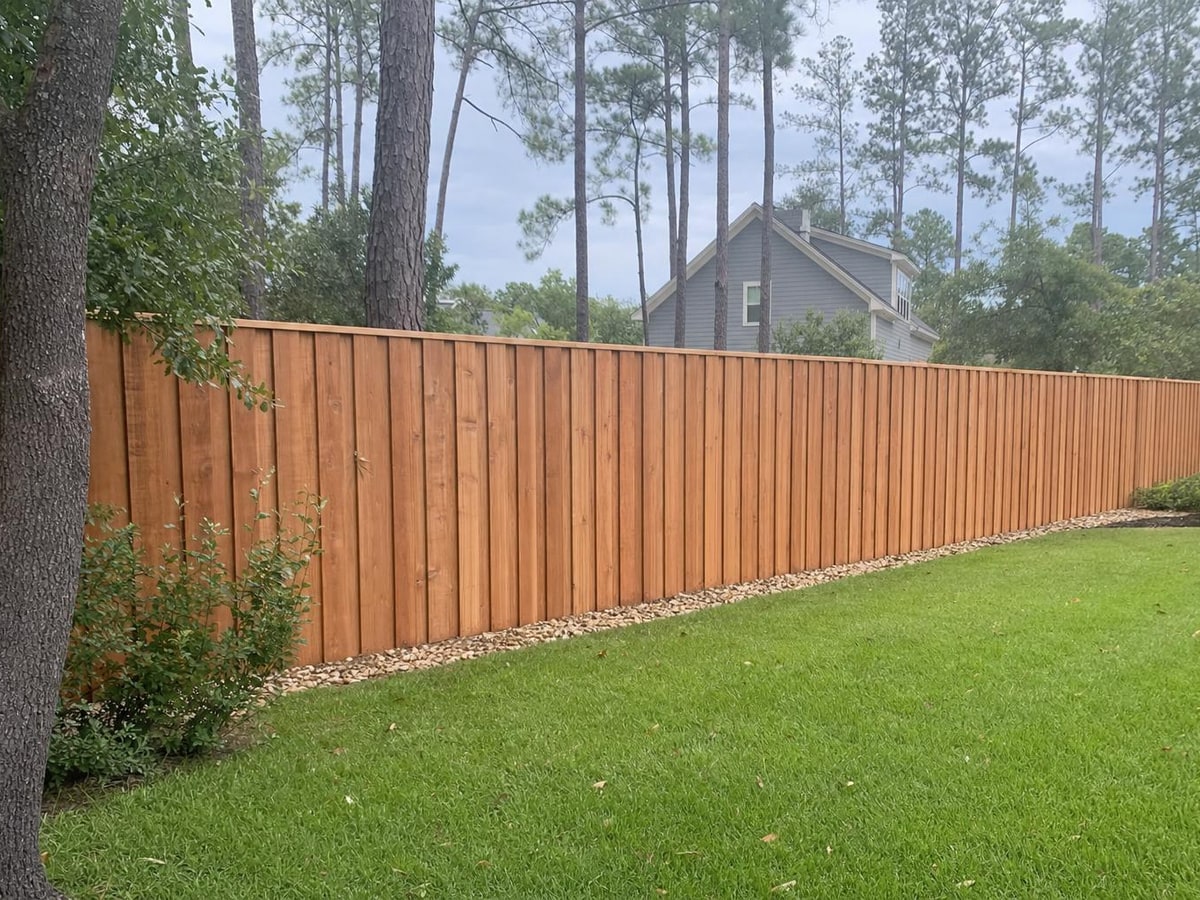
Cedar Fence

Why Wilmington Homeowners Upgrade to Cedar

Natural Rot & Insect Resistance

Western Red Cedar contains natural oils (thujaplicins) that resist decay, fungal growth, and wood-boring insects without the need for chemical pressure treatment. In our humid coastal environment, that natural resistance matters — cedar holds up where untreated wood would fail.

No Pressure-Treatment Chemicals

Unlike standard pressure-treated pine, cedar's protection is built into the wood itself — no copper-based preservatives, no chemical leaching, no special handling. A safer choice for vegetable gardens, play areas, and homeowners who prefer a more natural material.

Longer Lifespan

A properly installed cedar fence in Wilmington typically lasts 20–30 years — significantly longer than the 15–20 years you'll get from a pressure-treated pine fence. Over the life of your home, that often makes cedar the better dollar-per-year value despite the higher upfront cost.

Weathers Gracefully to Silver-Gray

Left unfinished, cedar weathers to a soft, even silver-gray that suits Wilmington's coastal aesthetic beautifully. Stained with an oil-based product, it holds rich amber and red-brown tones for years. Either way, cedar ages with character — pressure-treated pine just looks tired.

Distinctive Aroma

Fresh-cut cedar has the unmistakable warm, spicy aroma that homeowners love. The scent fades over the first year or two, but the natural oils continue to work behind the scenes, repelling insects and resisting decay long after.

Refined, Premium Appearance

Cedar's tight grain, consistent color, and clean profile read as 'high-end' from across the yard. It's the wood you'd choose if you were building the front-yard fence at a custom home — and now it's available for any project where appearance matters.

Cedar Fence Styles We Install

Every classic wood fence style is available in Western Red Cedar. Below are the most popular cedar configurations we install for Wilmington homes — each one a premium variant of the corresponding wood fence style.

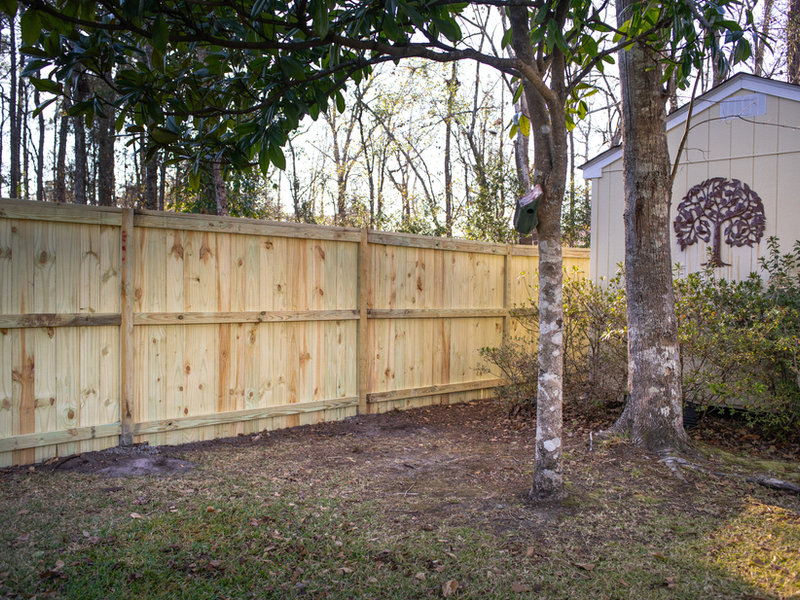
Cedar Board-on-Board

Cedar Board-on-Board

Our most-requested cedar style. Overlapping cedar boards on alternating sides of the rails give you total privacy from both directions while letting air move through. The cedar grain reads beautifully from the street, and there are no visible gaps or stringers — just clean, premium fence on both sides.

Maximum Privacy Curb Appeal Premium Homes
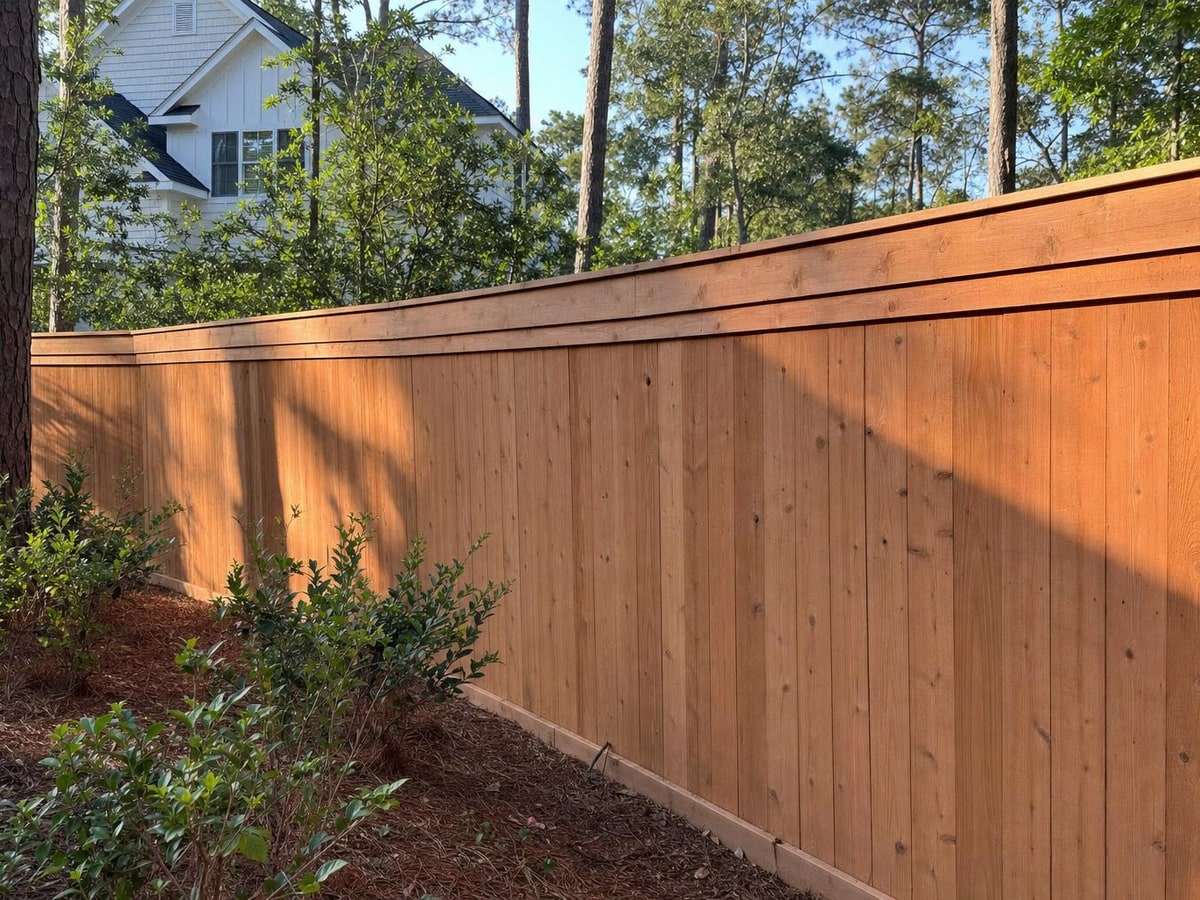
Cedar Cap & Trim

Cedar Cap & Trim

The flagship cedar privacy fence: cedar pickets framed by a horizontal cap rail and decorative trim. The cap protects the picket tops from weather, the trim adds architectural rhythm, and the whole fence reads as a finished piece of millwork. Perfect for upscale neighborhoods and front-of-house installs.

Upscale Homes Front Yards Architectural Detail
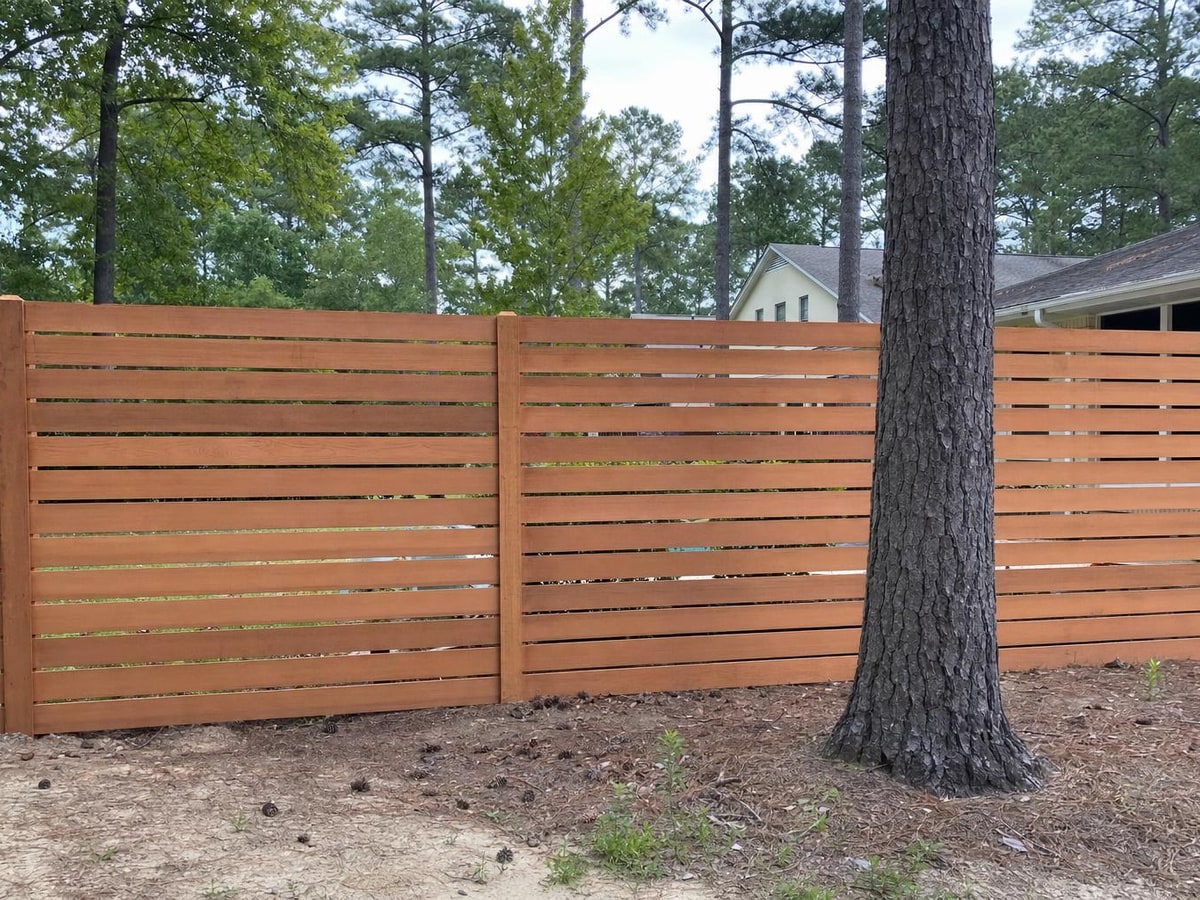
Cedar Horizontal (Modern Slat)

Cedar Horizontal (Modern Slat)

Wide cedar slats run horizontally for a clean, contemporary look that pairs perfectly with modern and transitional architecture. Available in full-privacy, semi-privacy, and louvered configurations. Cedar's tight grain and consistent color make it the ideal wood for the horizontal style — knot-heavy pine doesn't read the same way.

Modern Homes Architectural Statement New Builds
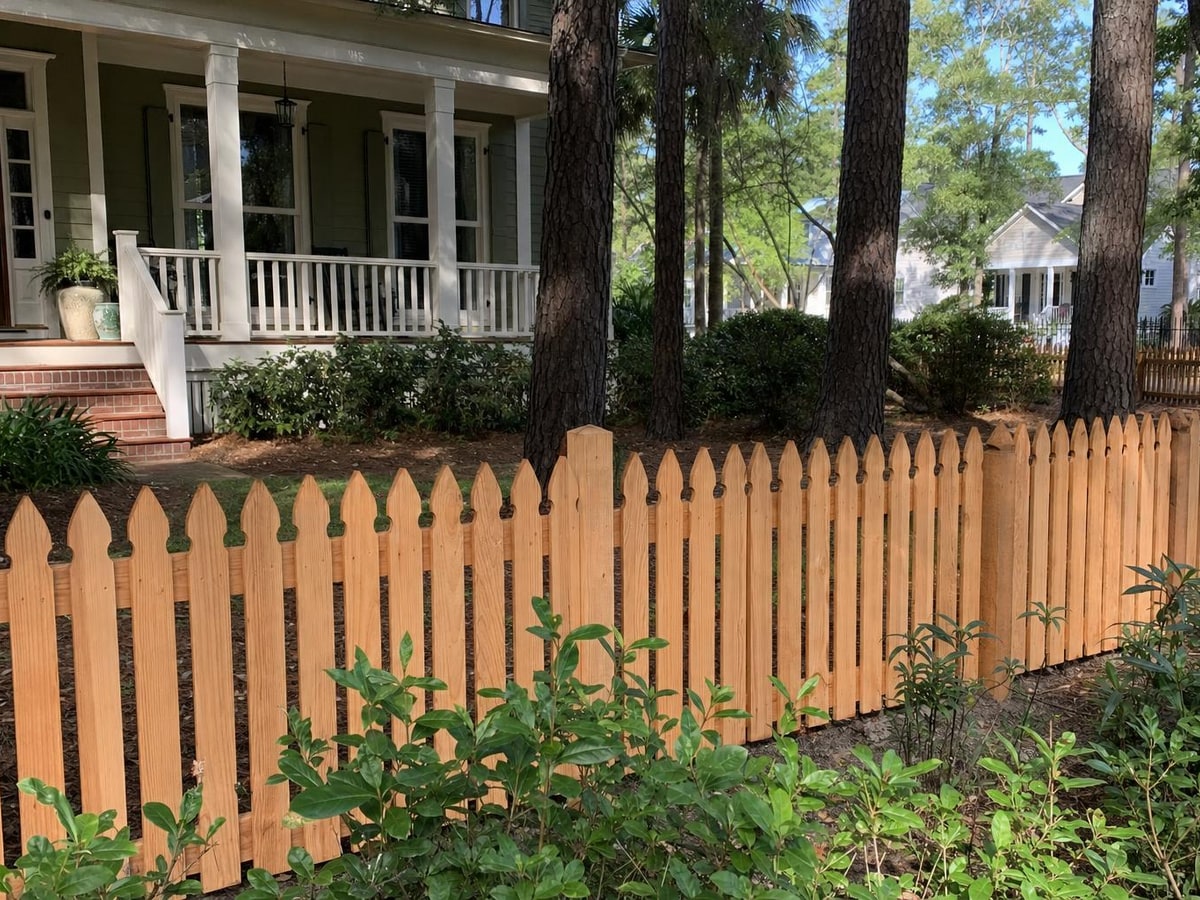
Cedar Picket Fence

Cedar Picket Fence

The quintessential American front-yard fence — built right. Cedar pickets in classic flat-top, dog-ear, French gothic, or scalloped profiles, set on properly-spaced cedar posts and rails. A cedar picket fence ages into a heirloom feature; a pressure-treated picket fence usually doesn't make it past year ten looking good.

Front Yards Traditional Homes Cottage & Coastal Style

Ready for a Free Estimate?

Most quotes delivered same day. No pressure, no obligation.

Our Cedar Fence Installation Process

1

Free On-Site Consultation

We visit your property, discuss your vision for a cedar fence, and confirm whether cedar is the right call for your application and budget. We'll review style options, height, finish preferences (oil-based stain vs. natural weathering), and any HOA considerations.

2

Cedar Sourcing & Quote

We source kiln-dried Western Red Cedar from trusted regional and Pacific Northwest suppliers. Within 48 hours of the consultation you'll get a detailed written quote with cedar grade specifications, fence design, and a clear timeline. No surprises.

3

Material Selection

Cedar lumber is hand-selected for straightness, grain, and consistent coloration before it leaves the supplier. We reject any boards with major defects so your fence looks great from day one — not after we've cherry-picked on-site.

4

Property Prep & Layout

We mark utilities through NC811, confirm property lines, and lay out post locations. For HOA neighborhoods (common across the Cape Fear region) we'll help assemble the architectural review submittal.

5

Professional Installation

Cedar posts (or pressure-treated posts with cedar pickets and rails — your choice) are set in concrete at proper depth. Pickets and rails are installed plumb, level, and properly spaced. We use stainless or hot-dipped galvanized fasteners that won't streak the cedar.

6

Walkthrough, Stain Guidance & Warranty

We walk the finished fence with you, review oil-based stain recommendations and timing (typically 3–6 months after install), and hand off your 5-year workmanship warranty documentation. Cedar maintenance is light — a re-stain every 3–4 years and your fence will outlast the loan on the house.

Cedar Fence Pricing in Wilmington

$45 - $85 per linear foot installed

Cedar fence pricing typically runs 30–50% above equivalent pressure-treated pine — the upfront premium that buys you the longer life, natural rot resistance, and refined appearance. Stockade-style cedar privacy starts around $45/linear foot, while cedar cap & trim and cedar horizontal designs range up to $85/linear foot. Every quote is itemized so you can see exactly what the cedar upgrade is costing — and what you're getting for it. For comparison, see our standard pressure-treated wood fence pricing.

What's Included

  • Premium kiln-dried Western Red Cedar pickets and rails
  • Cedar or pressure-treated posts (your choice)
  • Concrete post setting for maximum stability
  • Stainless or hot-dipped galvanized fasteners (no streaking)
  • Professional installation by experienced wood-fence crews
  • Utility location and HOA submittal coordination
  • Site cleanup and debris removal
  • 5-year workmanship warranty

Cedar Fence Questions & Answers

Cedar typically runs 30–50% more than equivalent pressure-treated Southern Yellow Pine. For a standard 6-ft privacy fence, that's roughly $45–$85 per linear foot for cedar vs. $25–$60 for pressure-treated pine. The premium buys you longer life (20–30 years vs. 15–20), natural rot and insect resistance without chemical treatment, and a more refined appearance. Over the lifespan of the fence, cedar is often the better dollar-per-year value.
A properly installed Western Red Cedar fence typically lasts 20–30 years in southeastern North Carolina, compared to 15–20 years for pressure-treated pine. Cedar's natural oils (thujaplicins) actively resist rot, fungal growth, and wood-boring insects — which matters a lot in our humid, salt-influenced climate. A re-stain every 3–4 years pushes lifespan toward the upper end of that range.
Cedar is actually lower-maintenance than pressure-treated pine in most ways — it doesn't need chemical treatment to resist rot. The main maintenance decision is whether to stain it or let it weather naturally. Left unfinished, cedar weathers to a soft silver-gray (no maintenance required, just slightly faster aging). With an oil-based stain re-applied every 3–4 years, cedar holds rich color and reaches the upper end of its lifespan range. We'll walk you through both paths so you can choose what fits your aesthetic and time budget.
Fresh cedar has rich amber, red, and warm-brown tones. Left unfinished, it weathers evenly to a soft silver-gray over 1–2 years — many homeowners love this look and choose it intentionally. Stained with a quality oil-based product, cedar holds its warm tones for 3–4 years between re-coats. Cedar ages with character regardless of which path you choose; pressure-treated pine just looks tired.
Oil-based stains penetrate deeper into the wood than water-based products, which matters more for cedar than for pine. The penetration locks in cedar's natural oils, holds up better against UV and our coastal humidity, and re-coats more evenly without lap marks or peeling. Water-based products tend to sit on the surface, peel, and show wear sooner — especially in our climate. We recommend high-quality penetrating oil stains and can suggest specific products at the walkthrough.
Yes — and we often recommend it. Pressure-treated posts (rated for ground contact) handle the moisture-and-soil interface better than cedar in our climate, while the visible portion of the fence — pickets, rails, and trim — is built in cedar for the look and longevity. This 'best of both worlds' approach is common on premium installations and saves some cost without compromising the visible result.
Cedar handles salt air and humidity better than most woods due to its natural oils, but for direct pool exposure or hard waterfront properties we sometimes suggest aluminum or vinyl as the lower-maintenance choice. For most Wilmington-area homes — including ones in coastal neighborhoods like Wrightsville Beach, Carolina Beach, and Porters Neck — cedar performs beautifully. We'll give you an honest assessment based on your specific site during the consultation.
Most Wilmington-area HOAs require architectural review for any new fence, regardless of material. Cedar is generally well-received because of its premium appearance — many HOAs that restrict pressure-treated pine will approve cedar. We help assemble the submittal package (drawings, material specs, neighbor sign-offs if required) as part of every install.

Get Your Free Cedar Fence Quote

Get a free, no-obligation quote for Western Red Cedar fence installation in Wilmington, Leland, Hampstead, Wrightsville Beach, or anywhere in the Cape Fear region. Most quotes delivered within 48 hours.